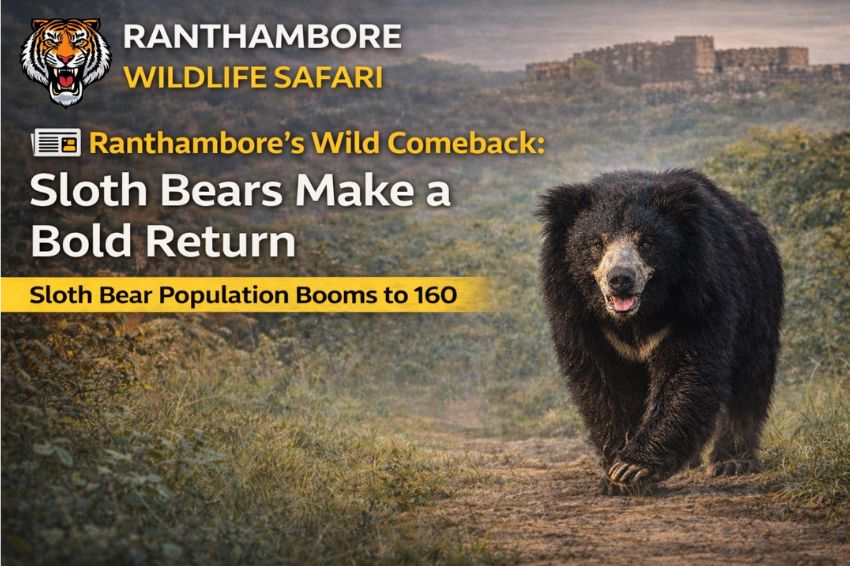
Ranthambore Tiger Reserve, one of India’s most iconic wildlife destinations, has long been known for its majestic Bengal tigers. However, a new conservation success story is now emerging from its forests — the remarkable comeback of sloth bears.
Over the past decade, the sloth bear population in Ranthambore has nearly tripled, reaching around 160 individuals today. This growth reflects not only successful conservation strategies but also a healthier and more balanced ecosystem.
📊 Sloth Bear Population Growth in Ranthambore
🔢 Then vs Now
- 2014–15 Population: 60–70 sloth bears
- Current Estimate: Around 160 sloth bears
This sharp rise highlights how improved habitat conditions and focused wildlife management can transform biodiversity.
🌱 What Led to This Wildlife Comeback?
🌾 1. Habitat Restoration
Expansion of grasslands has played a major role in supporting sloth bears by providing better shelter and food availability.
🍯 2. Improved Food Sources
Sloth bears mainly feed on termites, ants, and fruits. With better vegetation and soil conditions, their food supply has increased significantly.
🛡️ 3. Strong Conservation Efforts
Continuous monitoring, anti-poaching measures, and eco-sensitive tourism policies have ensured a safe environment for wildlife to thrive.
🐻 Role of Sloth Bears in the Ecosystem
Sloth bears are not just fascinating animals — they are essential for forest health.
- They dig soil while feeding, improving soil fertility
- Help in natural seed dispersal
- Control insect populations like termites
👉 Their presence indicates a healthy and balanced ecosystem
🐅 Bear vs Tiger: A Rare Wildlife Dynamic
One of the most interesting developments is the interaction between sloth bears and tigers.
- Sloth bears are known for their strong claws and aggressive defense
- In some cases, bears have even chased away tigers
- Such encounters have gained attention on social media and wildlife platforms
These moments add excitement and unpredictability to Ranthambore safaris.
🚙 Impact on Safari Tourism
The rise in sloth bear sightings has enhanced the overall safari experience.
🌟 What Tourists Can Expect
- Higher chances of spotting diverse wildlife
- Unique sightings beyond tigers
- More thrilling and memorable safaris
Ranthambore is now becoming a multi-species wildlife hotspot, not just a tiger reserve.
⚖️ Human-Wildlife Balance
Despite the increase in population, there have been no major human-bear conflicts reported.
This shows:
- Effective park management
- Balanced wildlife distribution
- Responsible tourism practices
🌍 A Bigger Conservation Success Story
The growth of the sloth bear population is not just a number — it is a sign of:
- Ecosystem recovery
- Biodiversity improvement
- Sustainable conservation success
Ranthambore is now setting an example for wildlife reserves across India.
🔥 Key Takeaways
- Sloth bear population increased from 70 to 160
- Habitat restoration played a major role
- Bears contribute to forest health and balance
- Wildlife tourism is getting a major boost
- Ranthambore is evolving beyond just a tiger reserve
❓ FAQs
1. How many sloth bears are in Ranthambore?
Around 160 sloth bears are currently estimated in the reserve.
2. Why is the sloth bear population increasing?
Due to better habitat, food availability, and conservation efforts.
3. Are sloth bears dangerous?
They can be defensive in the wild but usually avoid humans.
4. Can tourists spot sloth bears in safari?
Yes, sightings are increasing, especially in less crowded zones.
5. Is Ranthambore only famous for tigers?
No, it is now gaining recognition for diverse wildlife including bears, leopards, and more.
Conclusion
Ranthambore’s sloth bear comeback is a powerful reminder that nature can heal when given the right conditions. From just a few dozen to a thriving population, this journey reflects years of dedication to conservation.
For travelers, photographers, and wildlife lovers, Ranthambore now offers more than ever before a chance to witness a truly balanced and vibrant ecosystem in action.